Let's Break It Down
Have you ever noticed how one small thing can change your entire state?
Someone says something that rubs you the wrong way. A driver cuts you off in traffic. Your partner does something you've asked them a hundred times not to do.
It's an ordinary moment. Nothing particularly unusual has happened.
And yet, something changes.
Your thoughts change direction. Emotion charges. Your body automatically tightens. You're entire being feels a shift.
It's not something you necessarily intend and it even seems as if it's happening to you.
One moment has become an experience that extends well beyond the moment itself.
But here's what interests me.
How much of that response are you actually aware of?
And even better....
How much of that response are you actually in charge of?
We tend to think of a response as something simple. Something happens, we react, and then we move on.
It's automatic. It's human. And because of that, we believe, inconsequential.
Up until now, we may have thought physical health is physical. Mental health is of the mind. Emotional health is emotional.
But in reality they're all tied together. There is no door that stops a thought from affecting the body. There is no barrier between lived emotion and biological operations. And the body, subjected to these minute pieces of information, day after day, year after year, translates that information into your unique physical imprint on earth today.
That's how our response mechanisms work.
And while it might seem impossible to take the magnitude of biochemical onslaught on the body and begin steering it in a different direction, the good news, both from science and traditional practices like Traditional Chinese Medicine, Buddhism, the Shaolin arts, etc., is that there is no one who has more power to do so than you.
But before we can change the automaticness of our responses, and the chemical cascade that follows, we have to be able to identify what's happening.
Thought
One of the most impactful activities of your entire human system is your thoughts.
How you think. What you think. Particularly the patterns that run on repeat.
You have tens of thousands of them each day, even when you're asleep. Each one of those thoughts produces a chemical and that chemical acts as information or instructions to the cells of the body how to operate and eventually replicate.
Here's the tricky part....
Most of the thoughts that make up your mind are subconscious. You don't have an ordinary awareness of them.
That's part of the genius of human design.
If you actually had to make conscious decisions about absolutely everything in your day, you'd be exhausted before breakfast.
So, subconscious programming takes over much of our executive function. It's already been programmed to respond to specific situations in very specific ways.
The problems most of us encounter, however, is this programming doesn't always work in our favor. In other words, it's not always producing a biochemical output that supports our cellular activity.
But here's what we do know....
Because our thoughts, even the subconcious thoughts, have been programmed, we know they can be reprogrammed.
Emotion
Our responses aren't limited to what we think.
We feel them.
Frustration. Fear. Disappointment. Resentment. Relief. Joy.
Sometimes we can name the emotion immediately. At other times, we experience a general sense of unease without knowing quite what we're feeling or why.
Thought and emotion are closely intertwined, but they aren't the same thing.
Thought provides context.
Emotion provides meaning and priority.
Emotion tells the body what to bring to the front of the line and what to place on repeat. The stronger the emotion - think of moments of surprise, great loss, trauma - the higher the priority and the more likely it will be automatically repeated.
Once again, emotional responses are largely programmed, which means they can be reprogrammed and even redesigned.
Energy
Because of its ephemeral nature, energy is often relegated to the land of woo.
The word can make people uncomfortable because it means different things in different contexts. In physics, energy has a precise scientific definition. In our everyday experience, we use the word to describe something we recognize but may struggle to explain.
Think about walking into a room and sensing tension before anyone has said a word.
Or spending time with someone whose presence leaves you feeling lighter, more settled, or somehow more alive.
You may not be able to identify exactly what you've noticed. Yet your experience of that person or place is as real as a ham sandwich.
In the context of Healing Mastery, we recognize that there is a world behind your eyes that is just as real as the world in front of them.
Even those ham sandwich experiences can be explained by science.
The truth is, there is more to our experience of life than the words we say and the actions we take. There is a constant non-verbal conversation happening between thoughts, emotions, the cells of the body, and the "vibe" or energy that radiates from within with or without our awareness.
The more we understand this non-verbal language, the more of a tool this thing called energy becomes.
The Body
Finally, there's the body.
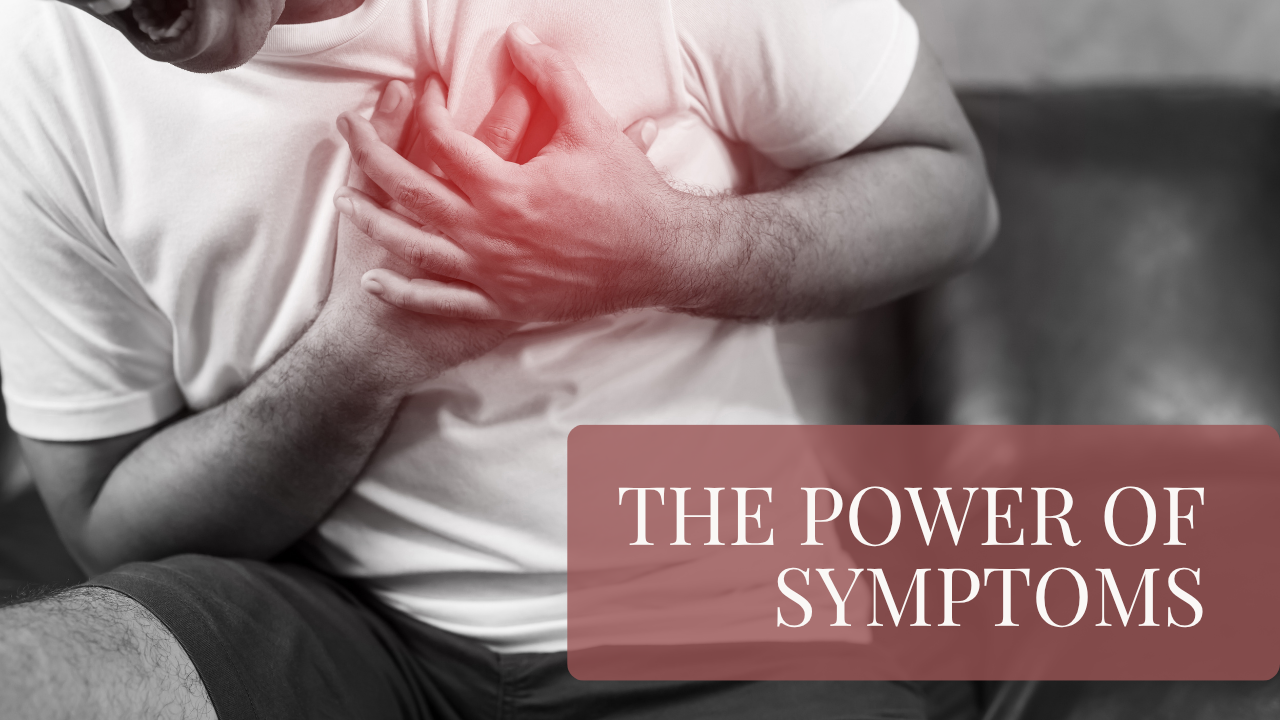
Your stomach tightens. Your jaw clenches. Your shoulders rise. Your heart begins to race. You feel a flush of heat or a sudden sinking sensation.
Sometimes the physical response arrives before you've consciously identified a thought or emotion. Sometimes you recognize it only after it has been building for a while.
The body is not separate from the experience. It is part of it.
And these physical responses are not merely incidental details. They are expressions of what is happening within us, involving physiological processes that include changes in the nervous system and the body's chemistry.
This is where our exploration of biochemistry begins to connect with something much closer to home.
The chemistry inside your body doesn't exist in isolation from the life you're experiencing.
In that life, your body has several roles.
It is, all at once, a visceral response mechanism, a feedback system, and a reciprocal communication system between the physical vehicle you live in and the mind and emotions it houses.
One Life
Can you see now, how given the uniqueness of how you and your particular way of responding to the millions of pieces of stimulus you encounter every day, can be the most powerful influence on your health?
These four response mechanisms—thought, emotion, energy, and the visceral response of the body—are not four separate compartments. We just break them down for ease of understanding and to develop new skills that influence biochemical production.
In reality, these dimensions overlap. They can not only occur simultaneiously, they influence one another. And they may very well unfold in different orders, and we may be conscious of one while barely noticing the others.
What begins as an ordinary moment can become a much larger experience, extending from the meaning we give an event to what we feel, what we sense, and what happens physically within us.
And all the while, our lives continue.
We have conversations, make decisions, navigate relationships, encounter disappointments, celebrate successes, and move through countless moments that seem too ordinary to warrant a second thought.
Yet these moments become one of the largest contributors of the environment in which our biology operates.
The question is no longer simply what is happening in your body. Or why is it failing. It is also what is happening in the life that might be creating vulnerability in the body.
If you're interested in learning more, including some of the skill building exercises that make a difference, Healing Mastery, The Hidden Architecture of Disease and Disease Reversal is now available on Amazon.
Click here to get your copy.
 |
Until next week,
Patricia


Responses